1. Why Is Malachite Not Transparent?
Malachite is a distinctive natural copper carbonate mineral known for its rich green color, concentric rings, and flowing, banded patterns. It is widely used in decorative stone applications, including luxury feature walls, entryway tables, dining tables, custom furniture, and high-end interior finishes.
Unlike certain varieties of agate, clear quartz, and amethyst that can transmit light, natural malachite is typically opaque or nearly opaque, even when exposed to strong illumination. It generally does not allow light to pass through a slab in the same way as translucent agate.
This characteristic is primarily related to its mineral composition, internal microstructure, and the way light interacts with the material.
Understanding these properties helps designers and architects select the right natural gemstone for their projects, especially when deciding between opaque decorative materials and stones intended for backlit applications.
2. Mineral Composition: What Makes Malachite Different?
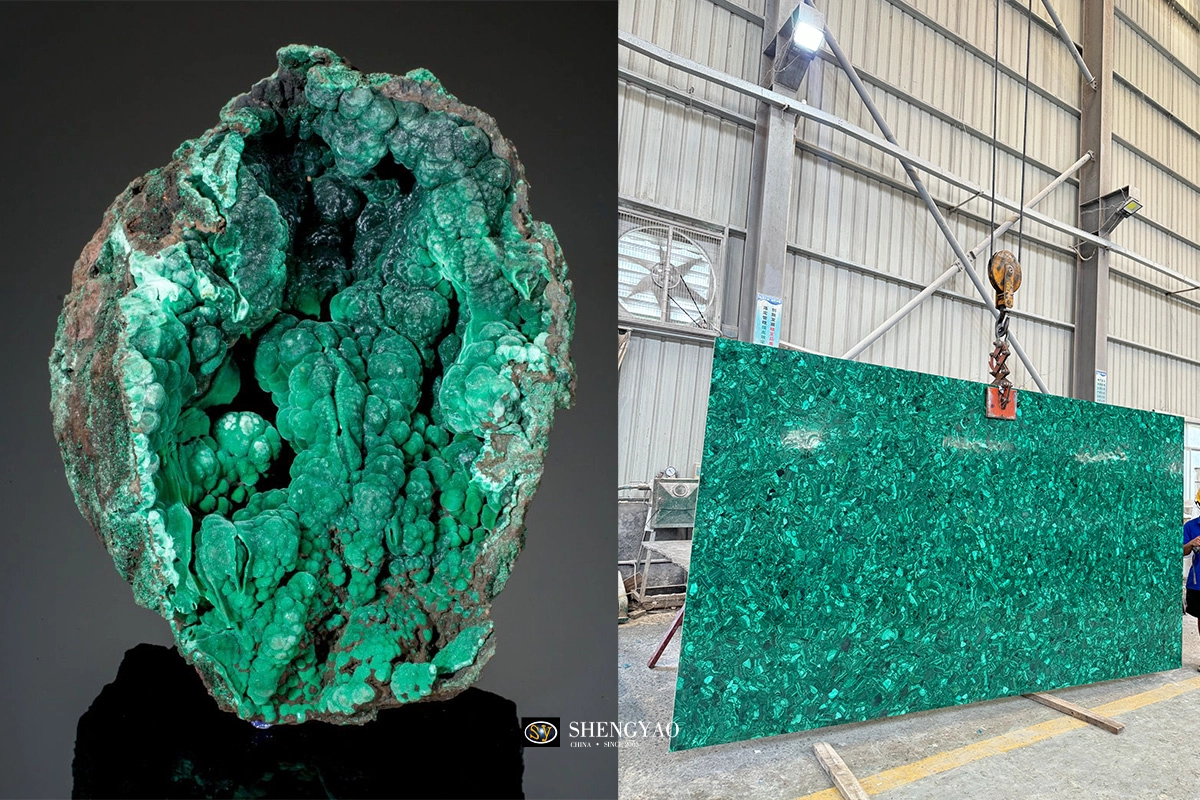
Malachite is a natural basic copper carbonate mineral with the chemical formula Cu₂CO₃(OH)₂. It belongs to the carbonate mineral group.
Its characteristic green color comes from copper ions, which selectively absorb certain wavelengths of visible light. Different degrees of absorption produce variations ranging from bright green to deep green, often appearing in distinctive bands and patterns.
However, green color alone is not the reason malachite is opaque. Its optical properties are also influenced by how light travels through the mineral and how much light is absorbed, scattered, or reflected within it.
Copper-related light absorption reduces the intensity of transmitted light, while the mineral's internal structure further affects its ability to transmit light through the material.
3. Why Does Light Have Difficulty Passing Through Malachite?
3.1 Light Absorption Within the Mineral
When light enters malachite, some of its energy is absorbed by the mineral rather than transmitted through it.
Because malachite selectively absorbs certain wavelengths of visible light, the intensity of light decreases as it travels through the material. As the optical path becomes longer, the amount of light reaching the opposite side generally becomes smaller.
This is one of the reasons why malachite slabs typically appear opaque under ordinary lighting conditions.
3.2 Internal Microstructure and Light Scattering
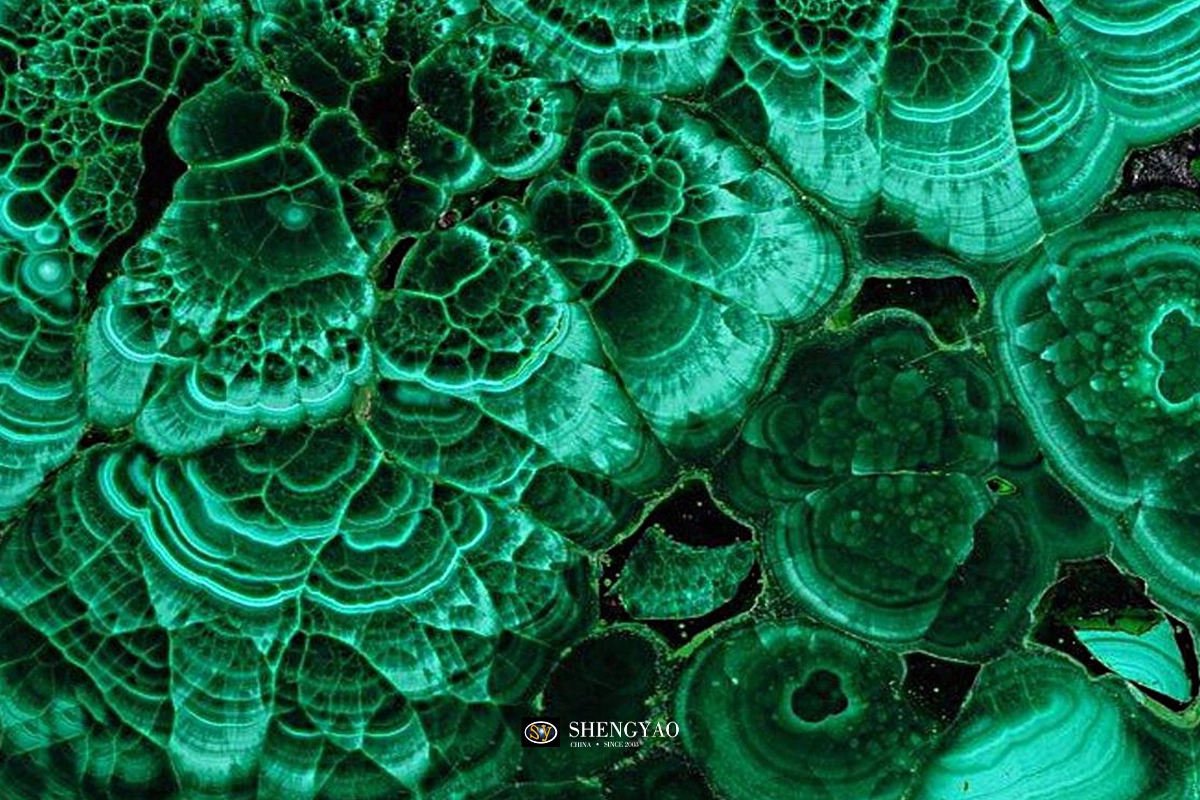
Natural malachite may contain fine crystalline grains, fibrous or radiating structures, and mineral aggregates with different orientations.
These internal features can redirect light as it travels through the material, causing scattering rather than allowing light to pass straight through.
As light undergoes repeated scattering and absorption, less of it emerges from the opposite side in a way that produces a visible transmission effect.
The combined influence of absorption and scattering contributes to malachite's characteristically low transparency.
3.3 How Slab Thickness Affects Light Transmission
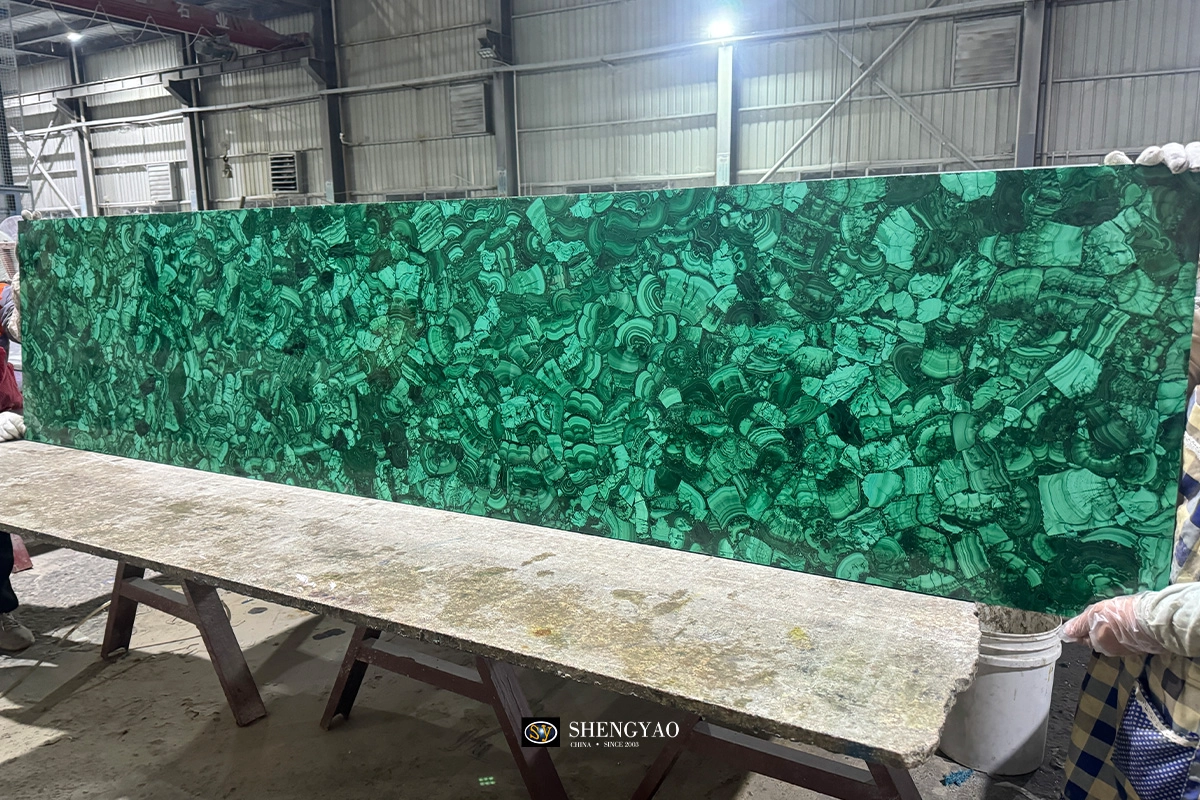
The thickness of a malachite slab also affects its optical performance. Even within the same mineral type, transparency can vary depending on thickness, internal structure, and material composition.
In general, a thicker slab presents a longer path for light to travel through, increasing the cumulative effects of absorption and scattering.
However, reducing the thickness of malachite does not automatically make it suitable for backlit applications. Its inherent optical properties must still be considered.
For this reason, malachite should not be expected to produce the same lighting effects as translucent agate or certain quartz materials.
4. Why Does Malachite Have Such Distinctive Green Patterns?
One of malachite's most recognizable features is its rich variety of green patterns.
Natural specimens may display concentric circles, wavy lines, parallel bands, or eye-like formations. These patterns are associated with variations in mineral growth, internal organization, and the structure of the mineral aggregates.
Different areas of a slab may exhibit varying shades of green, pattern density, and visual texture. As a result, every piece of natural malachite can have its own distinctive appearance.
Unlike translucent gemstones, whose visual impact may depend heavily on light passing through the material, malachite is valued primarily for its natural patterns, surface finish, and depth of color.
Its key decorative characteristics include:
Rich green tones: A range of shades from vivid green to deep forest green creates visual depth.
Natural patterns: Concentric rings, flowing bands, and wave-like markings provide a distinctive decorative effect.
Polished surface: Fine polishing enhances surface gloss and makes the natural patterns more visible.
Unique material character: Its recognizable appearance makes malachite a striking choice for luxury interiors and custom decorative projects.
5. If Malachite Is Opaque, Where Can It Be Used?
Being opaque does not limit malachite's design potential. Instead, its natural patterns, polished finish, carefully planned panel layouts, and combination with other materials can create a strong visual statement.
5.1 Malachite Feature Walls
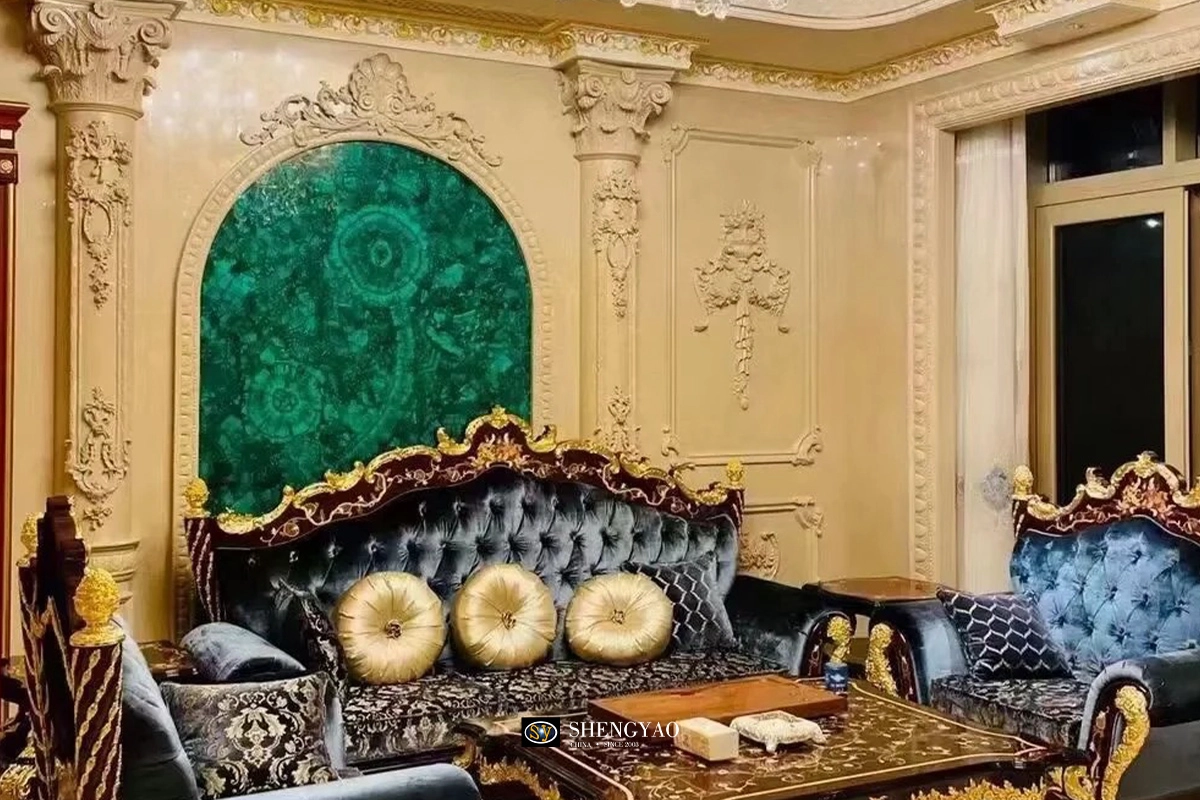
Large-format malachite surfaces can create a dramatic green focal point in luxury residences, hotel lobbies, private clubs, and high-end commercial interiors.
The natural patterns bring character to the space without requiring a backlighting effect.
5.2 Malachite Console Tables and Reception Desks
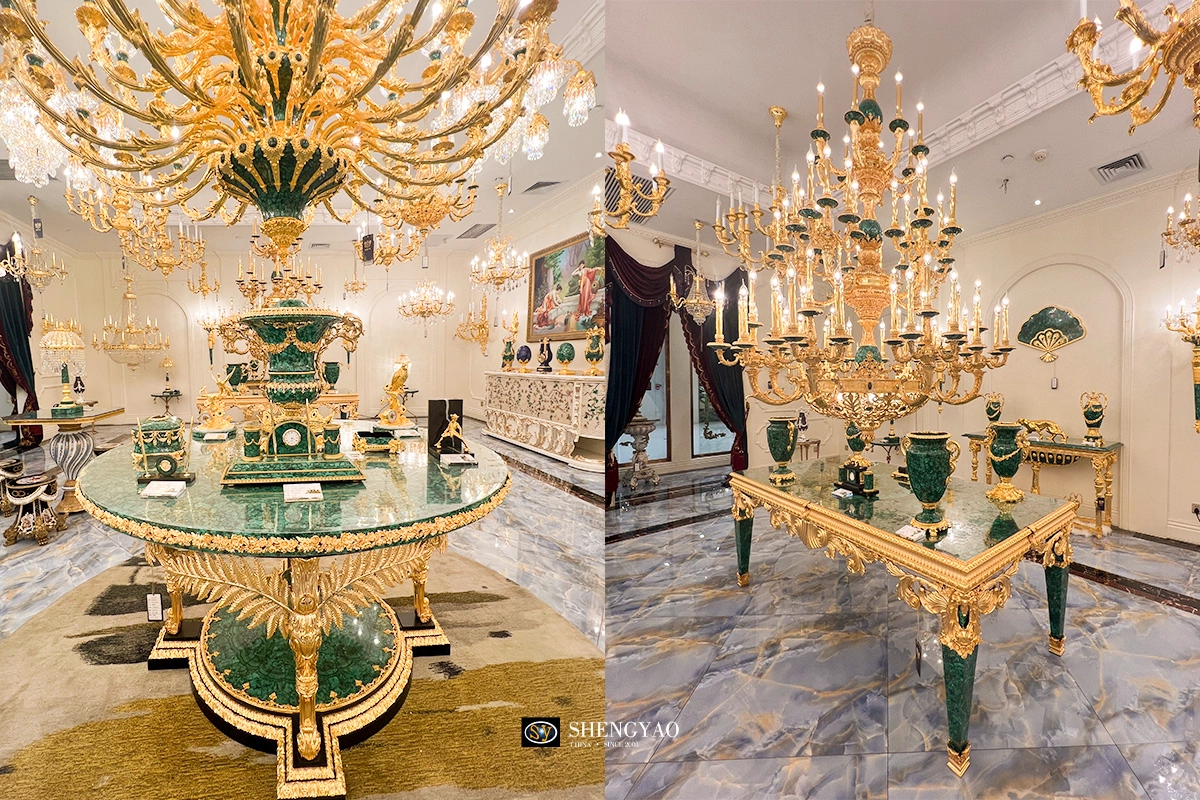
Malachite is well suited to custom console tables, reception desks, and statement furniture pieces.
When combined with brass, stainless steel, or other metal finishes, its rich green color and distinctive patterns can create an elegant contrast.
5.3 Malachite Dining Tables and Custom Furniture
With carefully selected patterns, precise panel fabrication, and detailed polishing, malachite can be incorporated into dining tables, side tables, cabinet finishes, and bespoke furniture.
Each finished piece can showcase the natural character of the stone while meeting the dimensions and design requirements of the project.
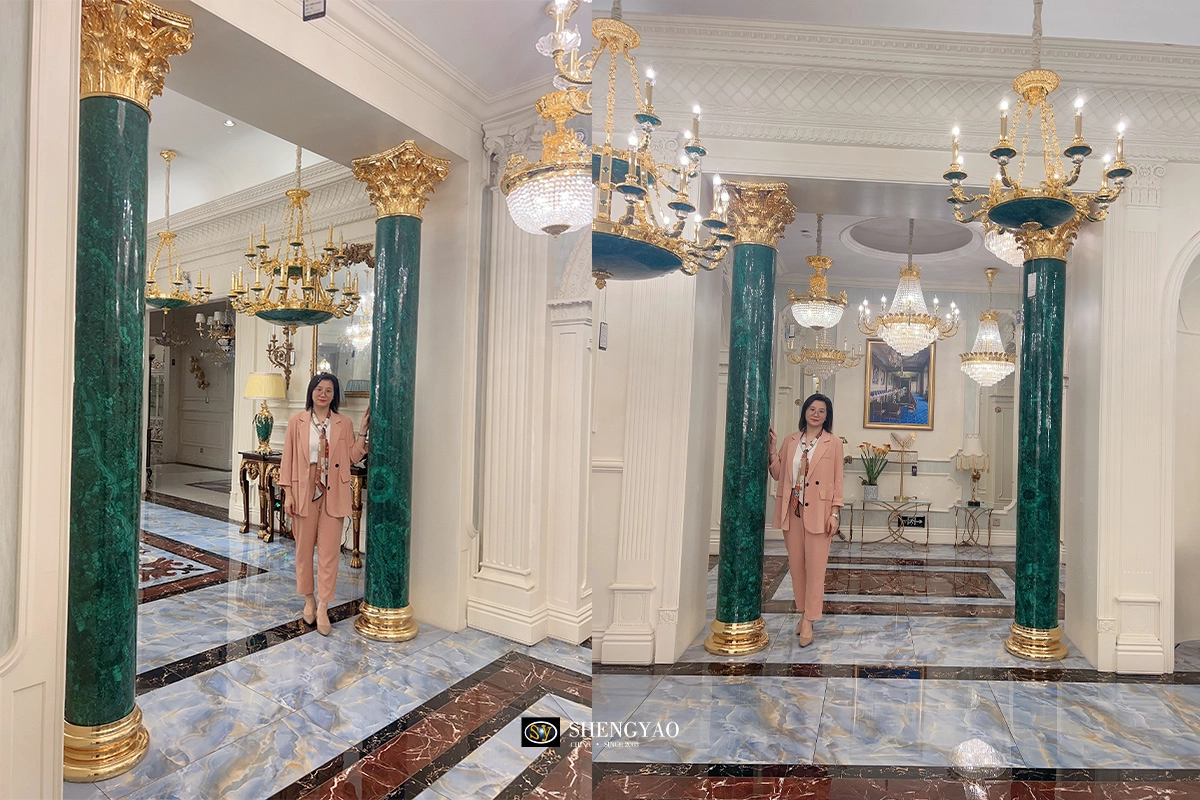
5.4 Malachite Columns and Decorative Architectural Elements
Malachite can also be used for decorative columns, Roman-style columns, and other custom architectural features.
Curved surfaces, carefully aligned patterns, and precise finishing can emphasize the natural variations within the material.
For projects that require a visible backlighting effect, such as illuminated bars, glowing feature walls, or backlit furniture, materials with suitable light-transmission properties should be evaluated instead of assuming that malachite will provide the same effect.
6. Malachite vs. Translucent Gemstone Materials
| Feature | Natural Malachite | Translucent Agate and Selected Quartz Materials |
| Main visual appeal | Rich green color and natural banding | Crystal-like appearance, layered patterns, and light transmission |
| Typical transparency | Usually opaque or nearly opaque | Can transmit light, depending on the variety and structure |
| Primary design approach | Natural patterns, polishing, panel matching, and shaping | Backlighting, light diffusion, patterns, and lighting effects |
| Common applications | Feature walls, furniture, tabletops, and decorative columns | Backlit bars, illuminated walls, and lighting-integrated furniture |
Actual performance varies with material quality, internal structure, slab thickness, fabrication methods, and lighting conditions. These comparisons describe typical characteristics rather than guaranteeing identical results for every natural stone.
7. How to Choose the Right Natural Semi Precious Stone Slab for Your Project
Selecting a natural semi precious stone slab involves more than choosing a color. Designers should also consider the intended application, desired lighting effect, slab thickness, fabrication requirements, and installation structure.
If your project calls for rich green patterns, a distinctive mineral appearance, and a strong decorative statement, malachite is an excellent material to consider.
If the design requires light to pass through the slab to create a soft, illuminated effect, translucent agate or suitable quartz materials may be more appropriate. The final selection should be based on actual sample testing and the project's lighting requirements.
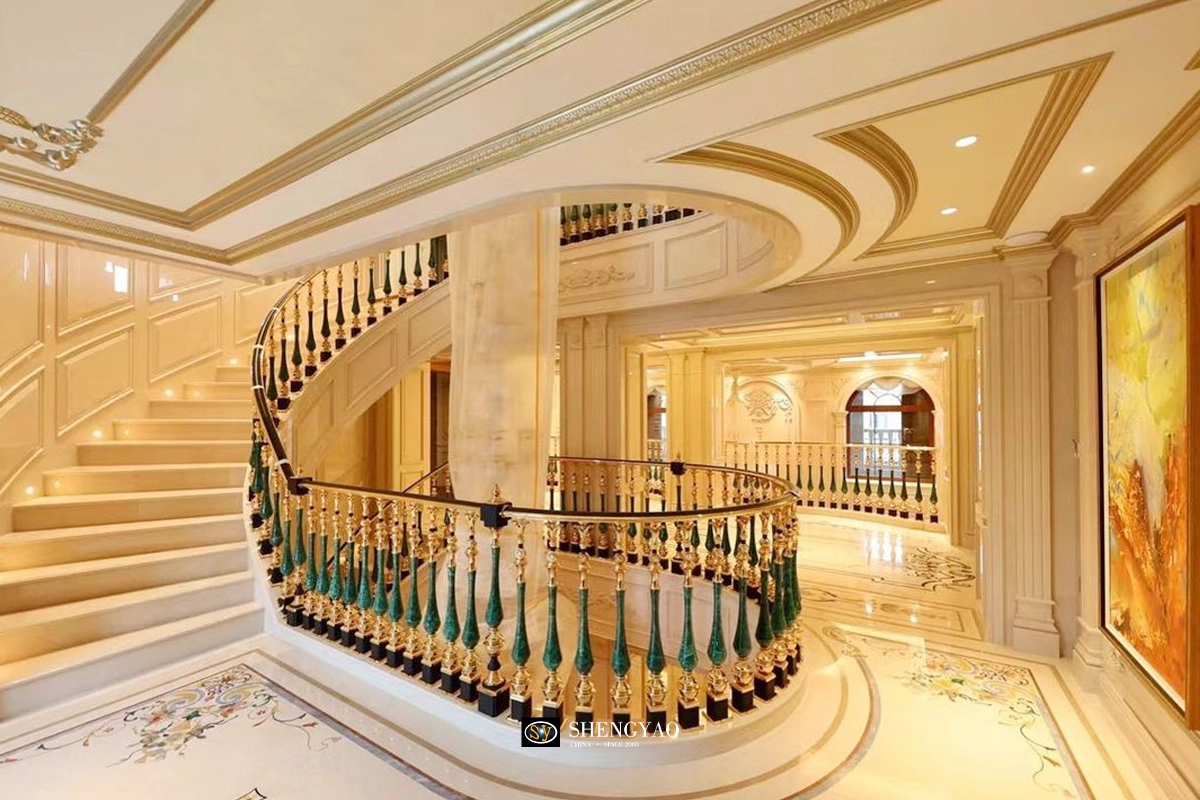
At Shengyao Gemstone, we focus on natural material selection, slab fabrication, and quality inspection throughout the production process. We provide natural gemstone materials and customized fabrication solutions for projects with different design concepts, dimensions, and processing requirements.
The right material is not simply the one that looks beautiful. It is the one that fulfills the design vision and performs as required in the finished space.
For residential, hospitality, commercial, and bespoke interior projects, contact Shengyao Gemstone to explore malachite, agate, quartz, and other natural gemstone materials, along with their specifications, fabrication options, and architectural applications.


