From Decorative Accents to the Centerpiece of Luxury Spaces
In traditional interior design, natural stone is commonly used for flooring, wall cladding, countertops, and decorative details. However, as luxury interior design continues to evolve, natural semi-precious stones are moving beyond small decorative applications and becoming an important part of large-scale architectural and interior design.
Materials such as agate, malachite, lapis lazuli, amethyst, clear quartz, and petrified wood offer distinctive natural patterns, rich colors, and unique mineral textures. These characteristics create new possibilities for designers seeking materials with strong visual identity and artistic value.
But how can semi-precious stones become primary materials in interior design? What are the best ways to select, combine, and apply them in different spaces?
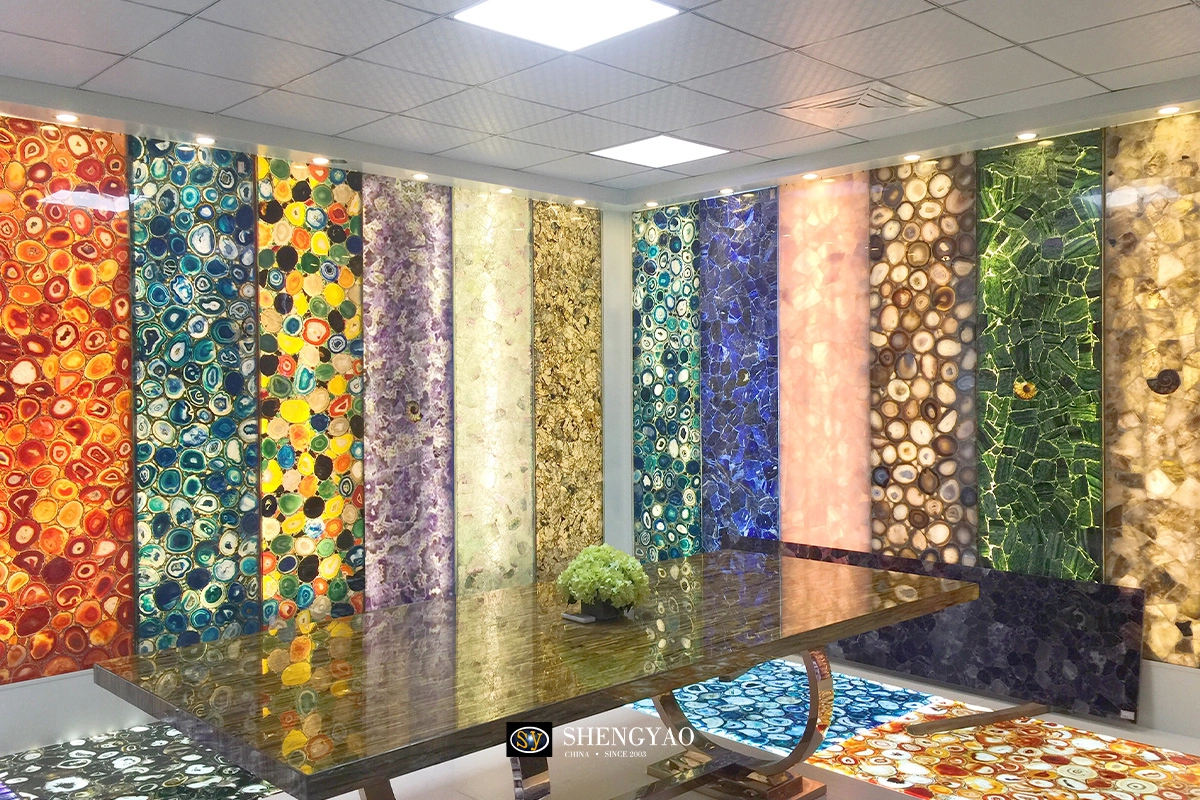
1. What Are Primary Materials in Interior Design, and Why Choose Semi-Precious Stones?
Primary materials are the main materials used to define the visual character and overall atmosphere of an interior space. They influence the color palette, textures, visual hierarchy, and design identity of a project.
Unlike conventional decorative materials, natural semi-precious stones feature unique mineral formations, patterns, and color variations created by nature over thousands or even millions of years.
Through professional cutting, matching, fabrication, polishing, and composite processing, these natural materials can be transformed into large-format slabs and customized architectural elements.
There are four key reasons why semi-precious stones are suitable as primary interior materials.
① Natural Patterns Create Distinctive Visual Impact
Each type of gemstone has its own visual characteristics. Agate features layered patterns, malachite displays distinctive concentric bands, lapis lazuli offers rich deep-blue tones, and quartz reveals fascinating crystalline structures.
These natural details can turn a wall, countertop, or furniture piece into a focal point of the entire space.
② Rich Colors Define the Design Direction
Semi-precious stones are available in a wide range of natural colors, including blue, green, purple, pink, yellow, brown, and gray.
Designers can select materials according to the desired atmosphere, whether creating a contemporary luxury residence, a sophisticated hotel lobby, or an artistic commercial interior.
③ Large-Format Fabrication Supports Architectural Applications
Through material selection, cutting, slab matching, and composite processing, semi-precious stones can be fabricated into large-format panels for feature walls, flooring, kitchen islands, bars, and customized furniture.
This allows designers to incorporate gemstone materials into the overall architectural concept rather than treating them as isolated decorative accents.
④ Translucent Properties Expand Design Possibilities
Certain agate and quartz materials offer natural light-transmitting properties. When combined with properly designed lighting systems, these materials reveal their internal patterns and mineral structures in a completely different way.
Backlit gemstone surfaces can create striking visual effects while adding depth and atmosphere to interior spaces.
2. Five Ways to Use Semi-Precious Stones as Primary Materials
Semi-precious stones are not limited to small decorative details. With appropriate material selection, fabrication techniques, and structural planning, they can be incorporated into multiple key areas of an interior.
① Feature Walls: Creating a Visual Centerpiece
Feature walls are among the most effective applications for semi-precious stone slabs.
Whether used in luxury residential living rooms, hotel lobbies, private clubs, or commercial reception areas, large-format gemstone panels can establish a distinctive visual identity.
Popular choices include:
With carefully planned slab layouts, bookmatching, and lighting integration, gemstone feature walls can achieve a more cohesive and visually impressive appearance.
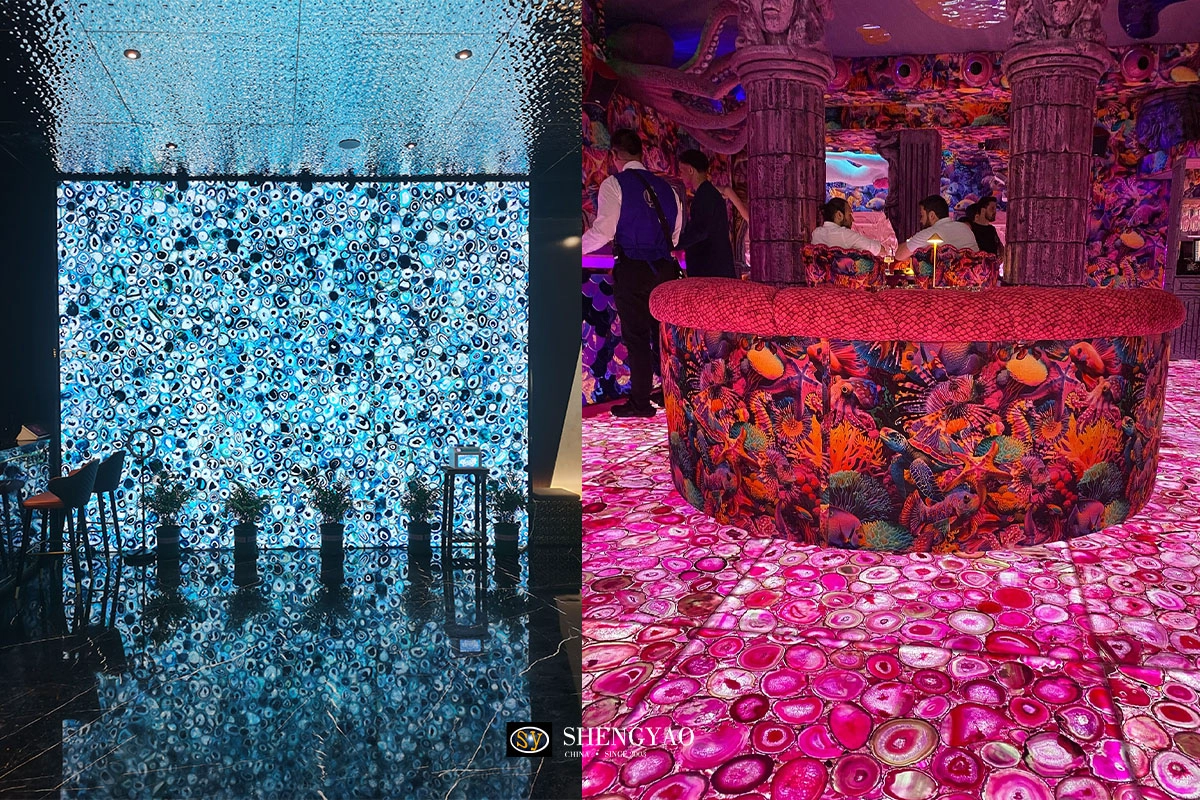
② Flooring: Bringing Natural Gemstone Patterns into the Entire Space
When semi-precious stones are used for flooring, they become an integral part of the overall interior design rather than simply a decorative feature.
Blue agate, green agate, and selected quartz materials can be incorporated into hotels, private residences, restaurants, and luxury commercial spaces through large-format layouts and customized fabrication.
Backlit gemstone flooring can create a particularly distinctive visual experience when combined with a properly engineered lighting system.
However, flooring applications require careful evaluation of structural support, load capacity, wear resistance, slip resistance, and installation conditions before material selection.
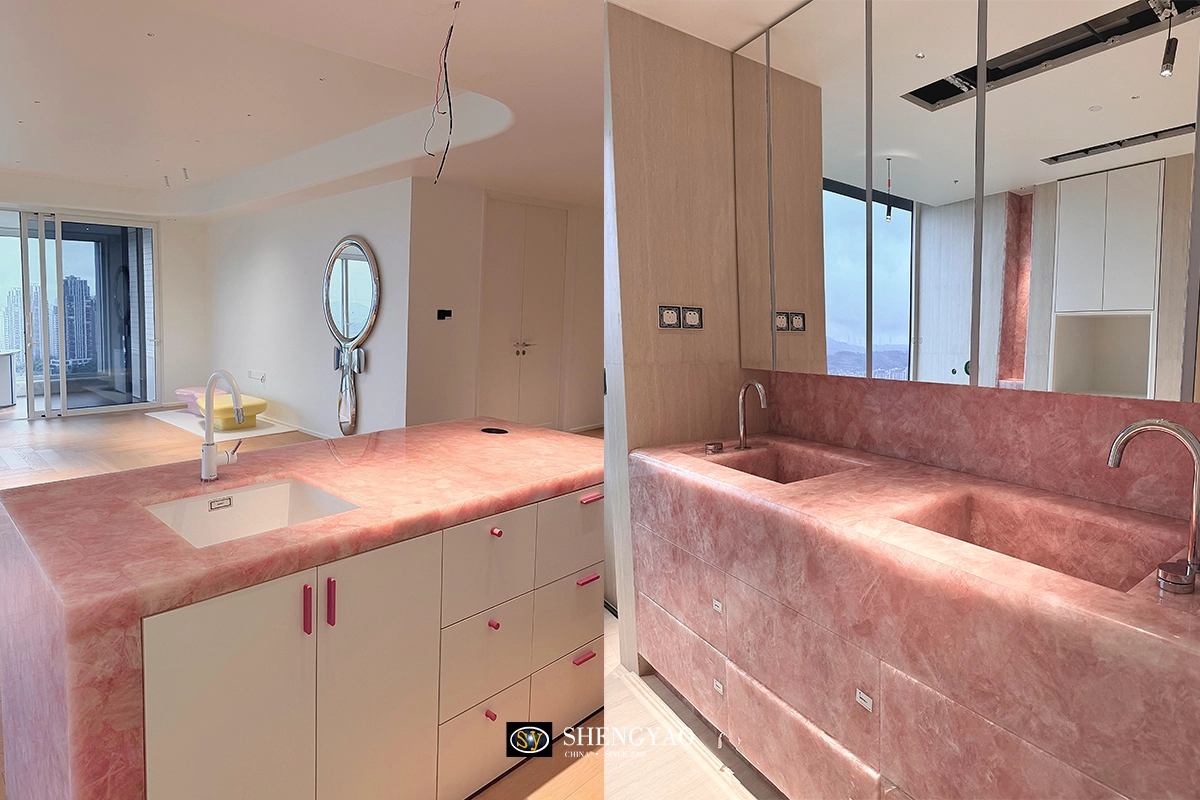
③ Bars and Kitchen Islands: Turning Functional Areas into Design Highlights
Bars and kitchen islands are among the most popular applications for semi-precious gemstone materials.
Compared with conventional stone countertops, gemstone surfaces offer distinctive natural patterns, rich colors, and potential lighting effects that make functional areas visually striking.
Examples include:
For these applications, slab thickness, structural support, edge detailing, fabrication methods, and lighting systems must all be considered to ensure both appearance and practical performance.
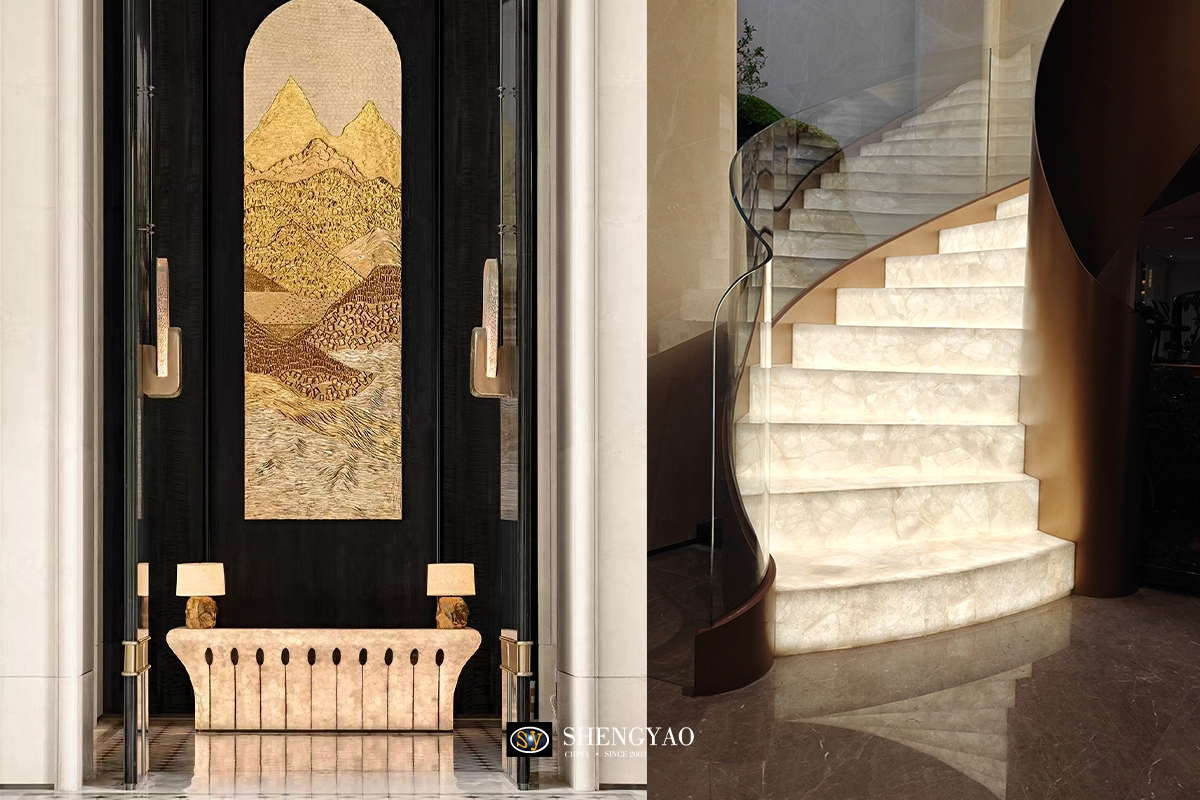
④ Staircases and Architectural Surfaces: Creating a Continuous Design Language
Staircases are more than functional architectural elements. They can also become important visual features within a luxury interior.
Translucent white crystal and selected agate materials can be incorporated into stair treads, vertical surfaces, and staircase feature walls.
By combining natural gemstone materials with lighting, designers can transform an ordinary staircase into a distinctive architectural statement.
Structural loading, slip resistance, connection details, and lighting maintenance must be carefully considered during the design and installation process.
⑤ Custom Furniture: Bringing Natural Gemstones into Everyday Spaces
Beyond architectural surfaces, semi-precious stones can also be fabricated into customized furniture.
Popular applications include:
Combining natural gemstones with brass, stainless steel, solid wood, and other materials creates additional opportunities for customized furniture design.
3. How to Choose the Right Semi-Precious Stone for Your Project
Selecting a gemstone material involves more than choosing an attractive color. Designers should also consider the space, design concept, lighting conditions, and practical requirements of the application.
| Material | Main Characteristics | Recommended Applications |
|---|---|---|
| Agate | Rich natural patterns; selected varieties offer translucency | Feature walls, bars, flooring, islands |
| Malachite | Distinctive green patterns and strong visual character | Villa interiors, furniture, reception desks, columns |
| White Crystal | Clear crystalline structure and elegant appearance | Staircases, bars, feature walls, countertops |
| Amethyst | Purple crystalline structure and artistic appeal | Bars, dining tables, feature surfaces |
| Lapis Lazuli | Deep blue mineral appearance | Reception desks, furniture, feature walls |
| Petrified Wood | Natural wood-like patterns and mineral texture | Dining tables, feature walls, custom furniture |
| Smoky Quartz | Warm brown and gray tones with a sophisticated appearance | Bars, wine cabinets, feature walls |
When selecting materials, three important factors should be considered.
① Space Size and Material Proportion
Large-scale applications require careful consideration of pattern continuity, slab layout, and overall color coordination.
For materials with strong natural patterns, designers can combine statement surfaces with more neutral materials to create a balanced interior.
② Natural Lighting and Artificial Lighting
For translucent agate and quartz, lighting color temperature, brightness, light distribution, and maintenance access should be planned in advance.
Different lighting conditions can significantly change the final appearance of a gemstone surface. Testing actual slabs under lighting before fabrication is highly recommended.
③ Application Requirements and Physical Performance
Different applications have different technical requirements. Wall cladding, flooring, countertops, and furniture surfaces require appropriate evaluation of wear resistance, impact resistance, structural support, surface treatment, and maintenance requirements.
4. How to Turn Semi-Precious Stones from Raw Materials into Finished Interior Applications
The success of a gemstone interior project depends not only on the natural material itself but also on fabrication quality and installation expertise.
A typical semi-precious stone project involves several important stages.
① Raw Material Selection
Select suitable gemstone varieties, colors, patterns, and material specifications according to the design concept and project requirements.
② Slab Fabrication and Pattern Matching
Through professional cutting, matching, polishing, and other fabrication processes, natural gemstone materials are transformed into slabs that meet the required dimensions and visual specifications.
For large-scale projects, slab numbering and pattern layout should be planned in advance.
③ Structural Support and Composite Processing
Depending on the application, suitable backing materials, composite structures, and installation methods may be required to meet transportation, installation, and long-term structural requirements.
④ Translucency Testing and Lighting Configuration
For translucent gemstone materials, each slab should undergo light transmission testing to evaluate lighting distribution and visual consistency.
The lighting system can then be adjusted according to the actual material characteristics and project design.
⑤ On-Site Installation and Finishing
Installation involves substrate preparation, positioning, fixing, slab alignment, joint treatment, and edge finishing.
Every detail contributes to the final appearance and quality of the completed space.
5. Why Work with a Professional Semi-Precious Stone Fabrication Supplier?
As semi-precious stones move from decorative accents to primary interior materials, the requirements for suppliers become increasingly demanding.
Luxury residences, hotels, commercial developments, and customized furniture projects often involve multiple materials, special dimensions, complex shapes, and large-scale installations.
A professional supplier should offer more than raw material sourcing. Key capabilities include:
Raw Material Sourcing: Reliable access to natural gemstone materials and professional material selection.
Customized Fabrication: Support for different dimensions, thicknesses, colors, patterns, and customized shapes.
Manufacturing Expertise: Professional cutting, matching, polishing, and composite processing.
Project Coordination: Material and fabrication solutions based on architectural drawings and project specifications.
Quality Control: Inspection of material appearance, dimensions, structural requirements, and light transmission performance.
With over 20 years of experience in natural gemstone fabrication, Shengyao Gemstone specializes in the processing and customization of agate, quartz, malachite, lapis lazuli, petrified wood, and other natural mineral materials.
We provide more than natural gemstone slabs. We offer customized material solutions and fabrication support for luxury residences, hotels, commercial interiors, and bespoke furniture projects.
From selecting natural gemstones to manufacturing feature walls, custom dining tables, and architectural applications, Shengyao Gemstone helps bring the beauty of natural minerals into exceptional spaces.


